


As 2026 kicks off, we continue to redefine how developers and businesses engage with telecom networks.
This past year highlighted the impact CAMARA is making across the ecosystem: In 2025, “open telco APIs” shifted from promising concepts to real industry plumbing. Across the ecosystem, operators and suppliers moved beyond one-off exposure of network capabilities toward more consistent, developer-friendly interfaces that can be relied on across markets, making network functions feel less like bespoke integrations and more like repeatable building blocks. We saw APIs increasingly treated as products: versioned, documented, tested, and designed for scale, with a clearer focus on quality, portability, and predictable behavior. Just as importantly, the conversation is maturing from “whether” to expose network capabilities to “how” to do it responsibly (e.g., balancing performance, security, privacy, and operational realities while enabling new classes of applications that can adapt to network conditions and deliver better experiences).
CAMARA helps accelerate this maturation by serving as the open, neutral collaboration layer where the industry can align, turning shared requirements into practical, interoperable API definitions and a growing body of implementation guidance. Throughout 2025, we brought operators, vendors, cloud providers, and developers into a common workflow to reduce fragmentation, improve consistency, and keep APIs grounded in real-world use cases. Read on to learn more about our activity and progress throughout 2025, and get a sneak peek at where 2026 is heading.
2025: Big Milestones & Growth
In an ecosystem as complex as telecom, how you release is just as important as what you release. Introduced in Fall 2024, CAMARA’s release management gives the community a shared cadence and a clear contract with the ecosystem: API changes are predictable, versioned, and supported by aligned documentation, tooling, and implementation guidance.
This discipline reduces real-world integration risk. Operators can plan rollouts with confidence, suppliers can align roadmaps, and developers can adopt new capabilities at their own pace—without worrying that a working integration will break unexpectedly. It also reinforces the idea that APIs are products: tested, documented, and designed for consistent behavior across regions and participating operators. Just as importantly, the meta-release approach helps CAMARA balance rapid innovation with stability by curating a cohesive bundle of APIs, making it easier for the ecosystem to know what’s “ready,” what’s evolving, and what’s newly available.
With that foundation in place, CAMARA’s 2025 releases weren’t just “more APIs”—they represented more reliable building blocks developers and enterprises can confidently deploy across markets.
Here are two releases that launched in 2025, marking clear milestones for the availability and adoption of open telco APIs:
- Spring 2025 Meta-Release: 38 APIs launched, including stable APIs for QoS profiles, edge/cloud integrations, and network-to-app connectivity.
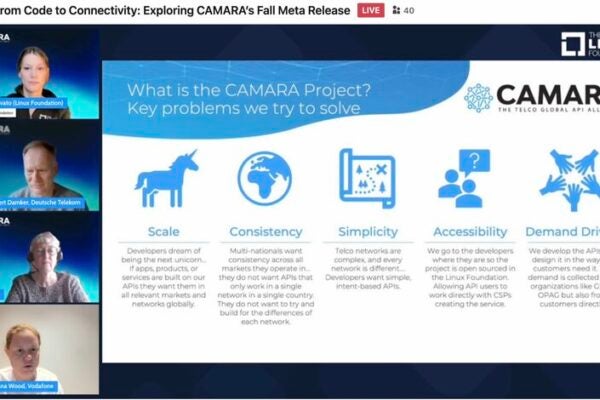
- Fall 2025 Meta-Release: A pivotal moment for the community, CAMARA expanded to 60 APIs, including 23 new APIs and 10 stable/production-ready APIs. This release bundled a curated set of versioned APIs with aligned documentation, test harnesses, and implementation guidance—so developers can build once and deploy with confidence across participating operators and regions.
CAMARA enables enterprises and developers to build network-aware applications using standardized, production-ready telco APIs that work consistently across operators and regions. The latest meta-release combines stable capabilities including Device Reachability Status / Device Roaming Status, SIM Swap / Device Swap (new), Number Verification / Location Verification, One-Time Password (SMS), Quality-on-Demand with QoS Profiles, and Simple Edge Discovery.
As highlighted by CAMARA member company CableLabs, these APIs help organizations reduce integration complexity, accelerate innovation, ensure global interoperability, enhance user experiences, and differentiate services. See CableLabs’ full write-up at: https://www.cablelabs.com/blog/camara-api-fall-25-meta-release
CAMARA Around the Globe
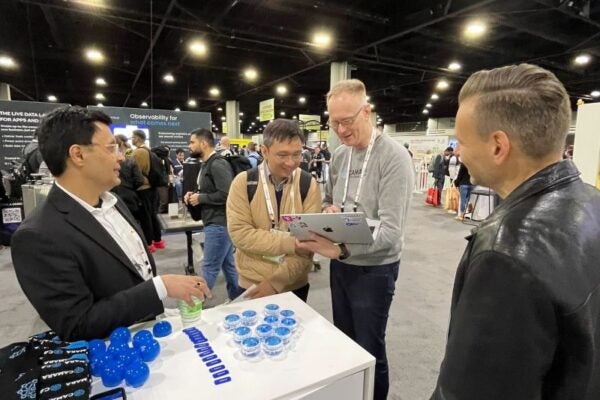
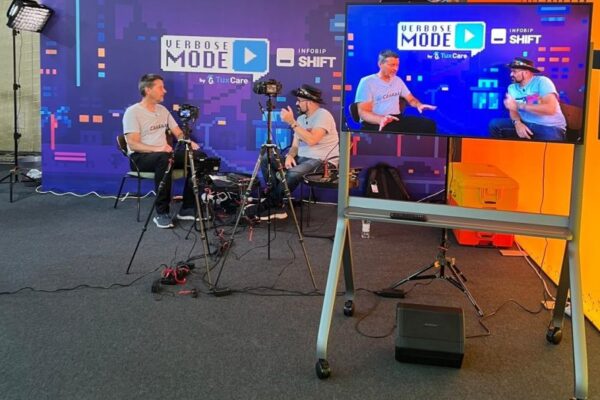
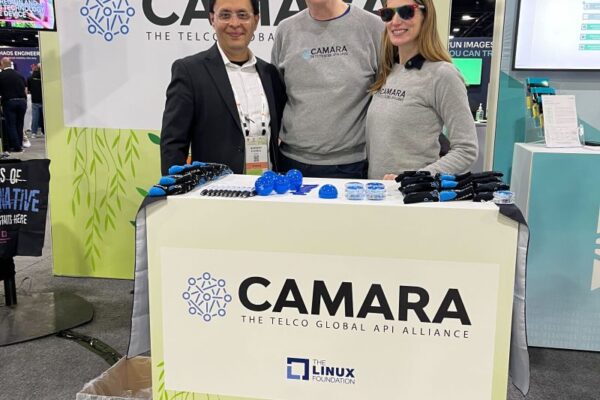
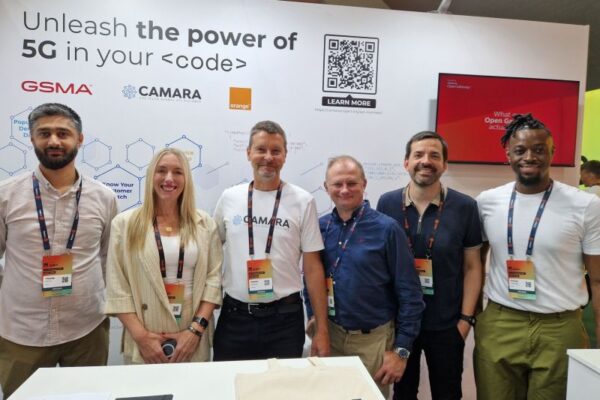
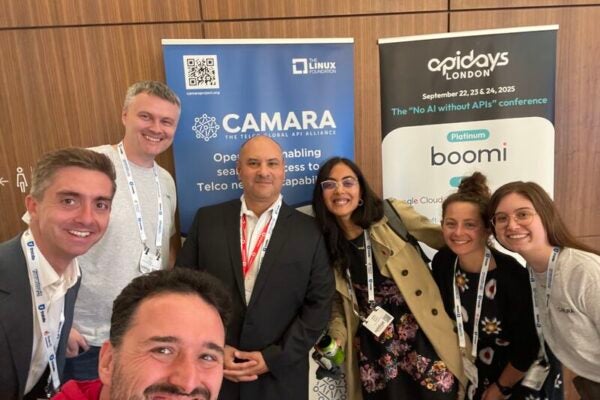
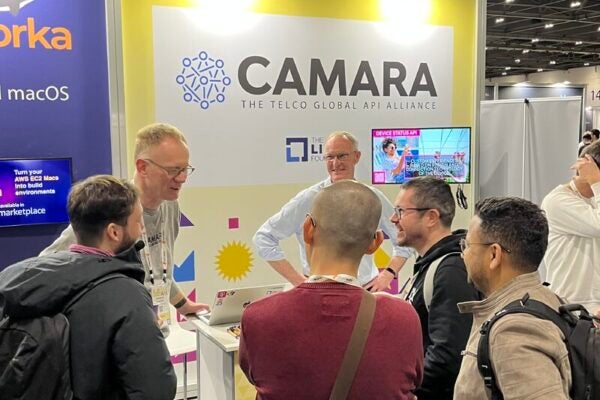
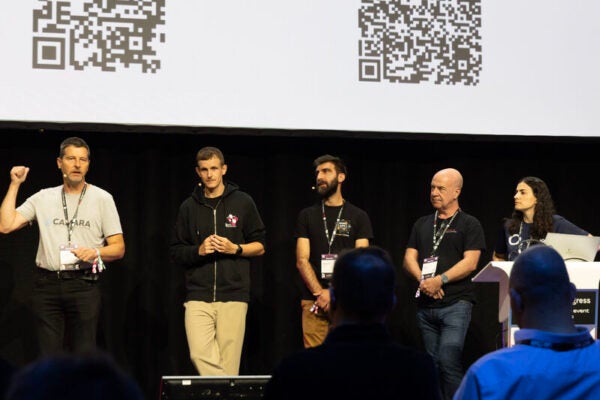
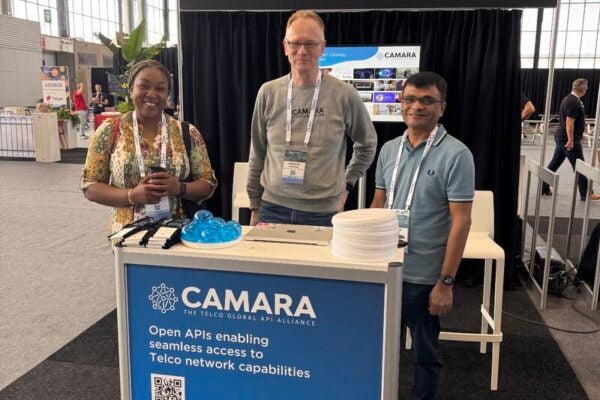
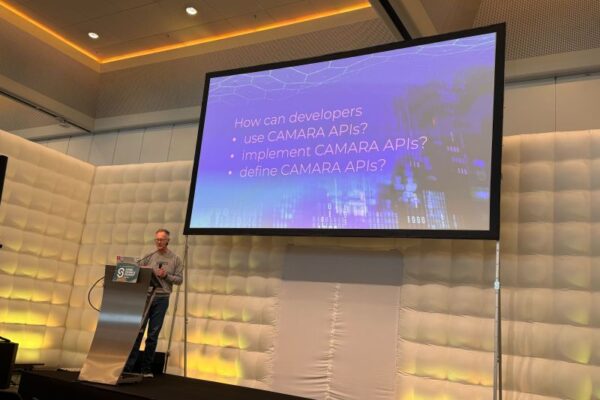
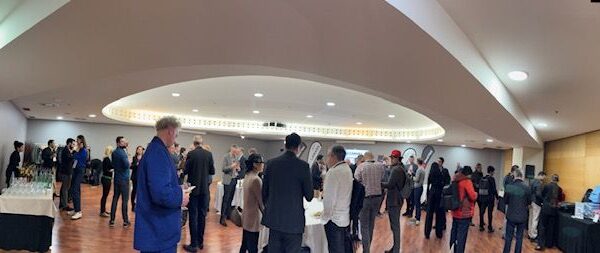
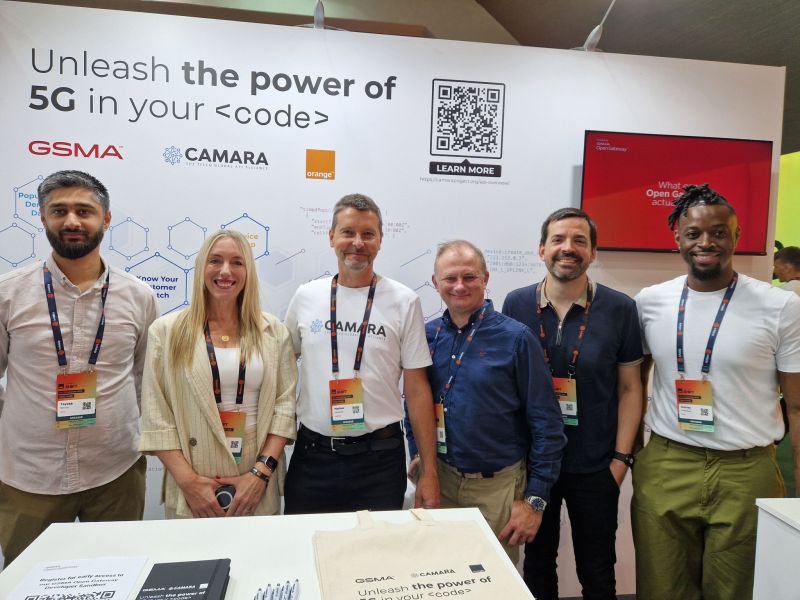
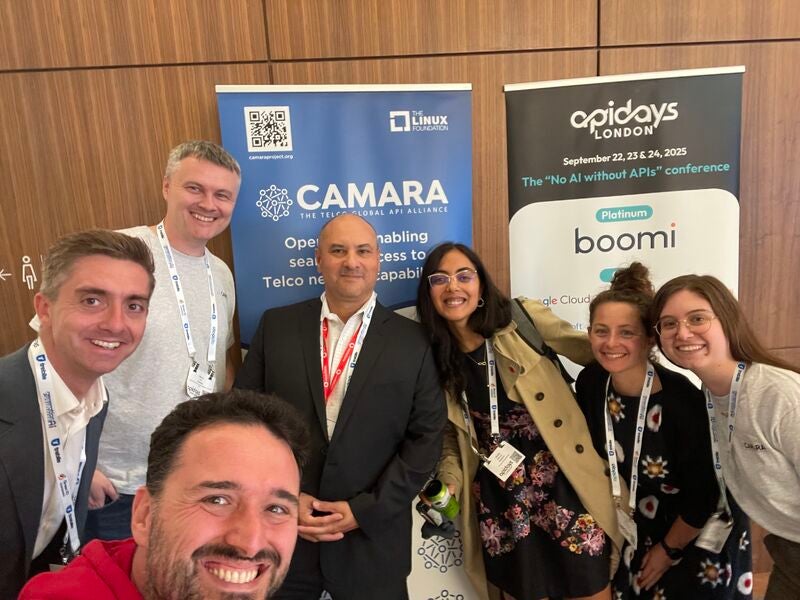
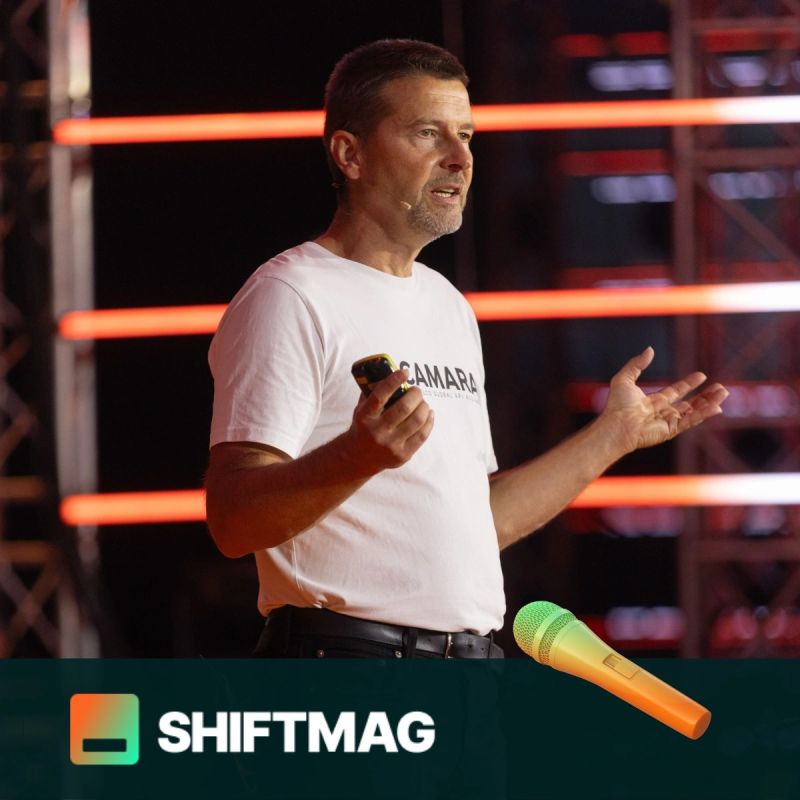
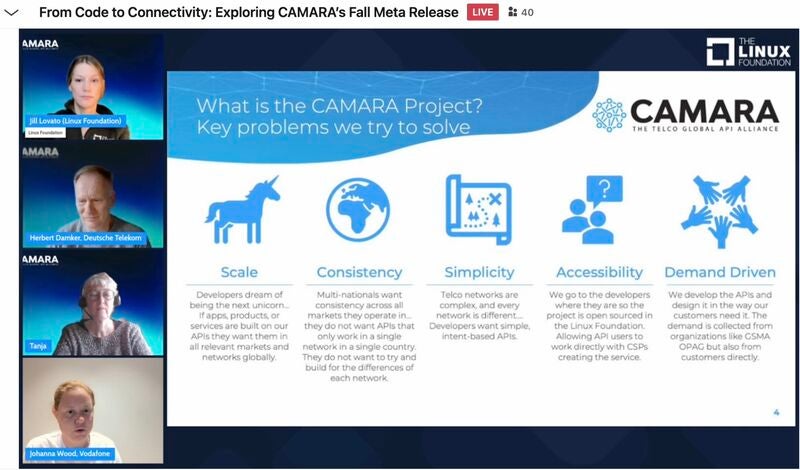
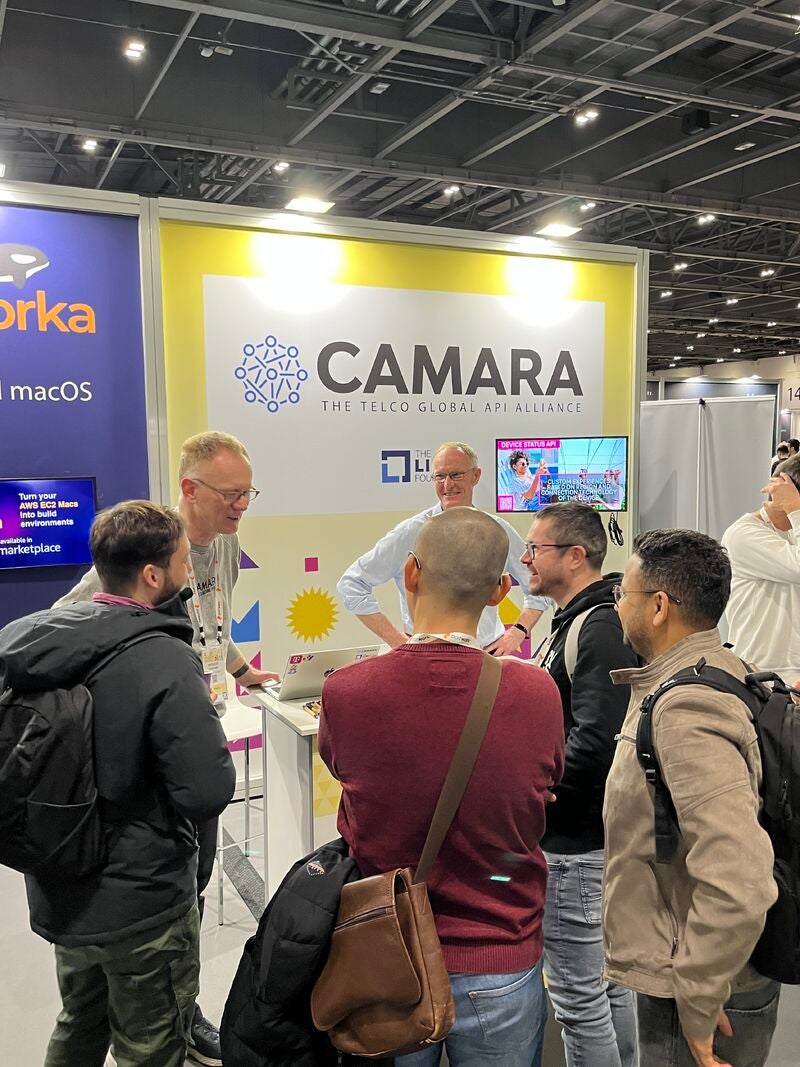
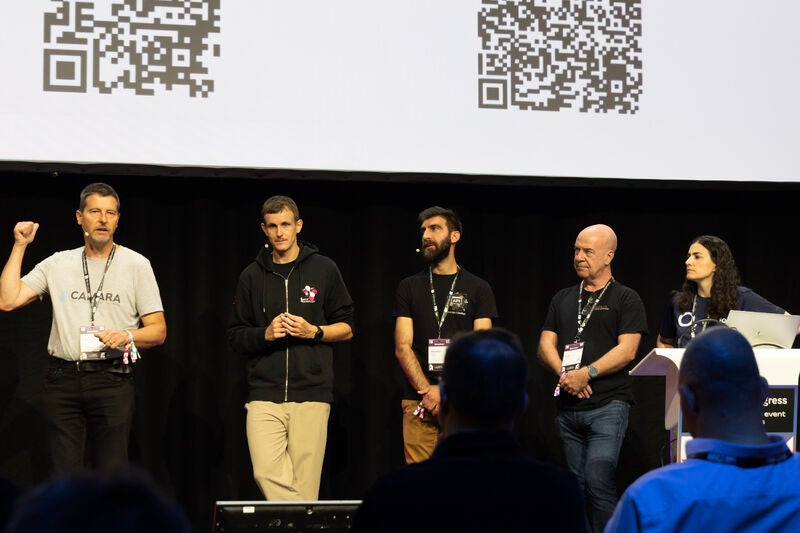
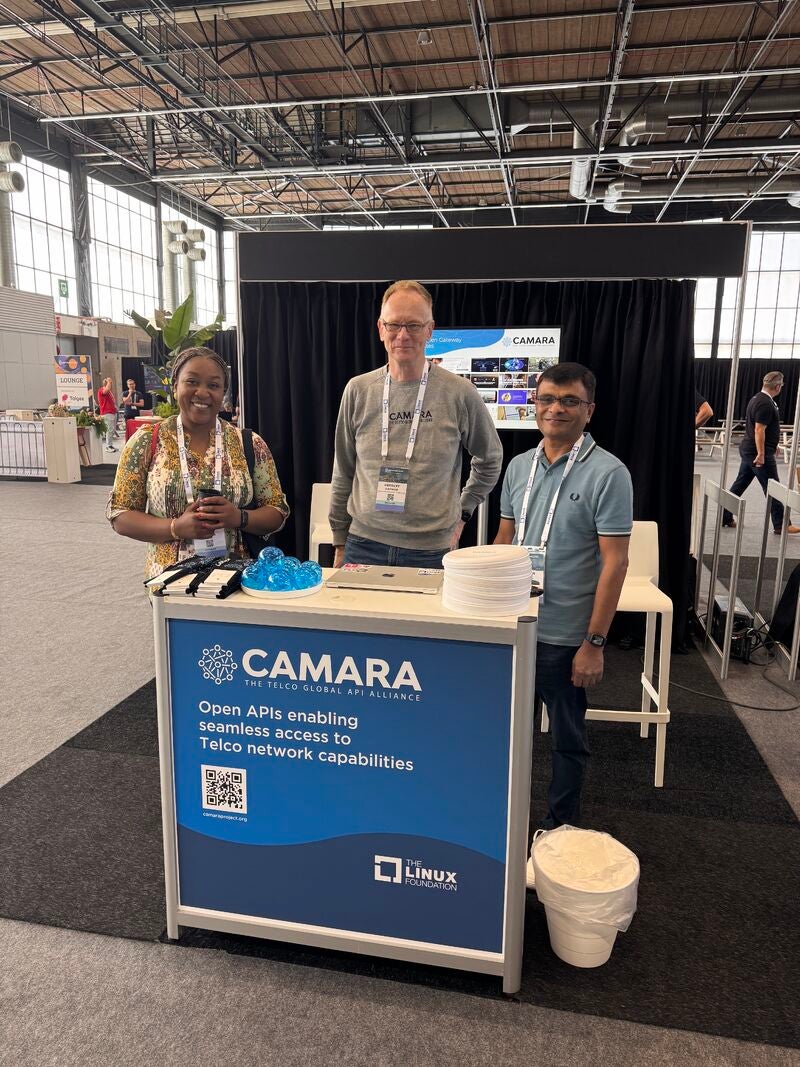
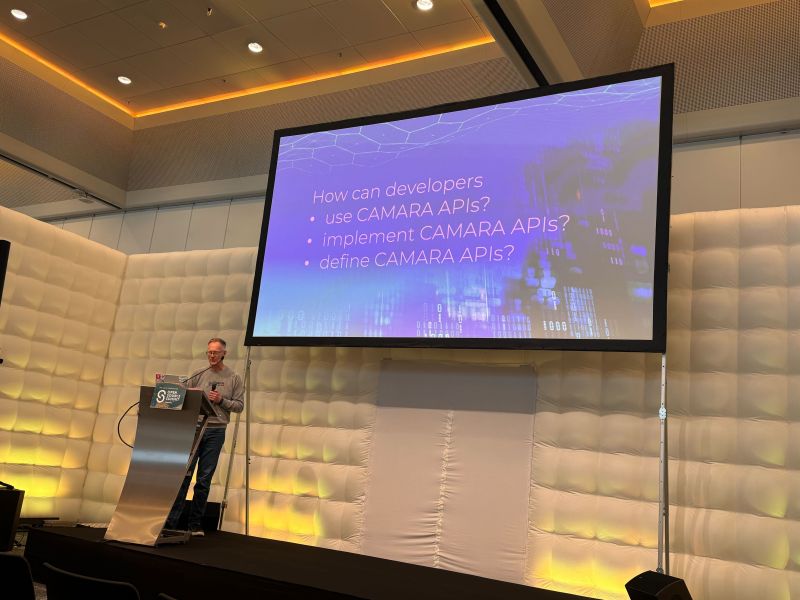
2025 was a busy year as we continued to connect with developers and industry leaders around the world. See below for a snapshot of some of the industry events we participated in, as well as podcasts and virtual sessions:
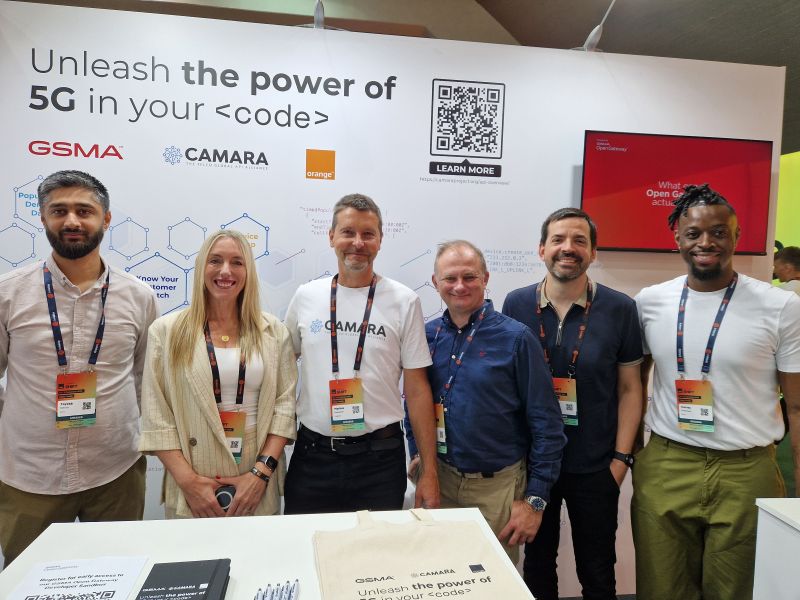
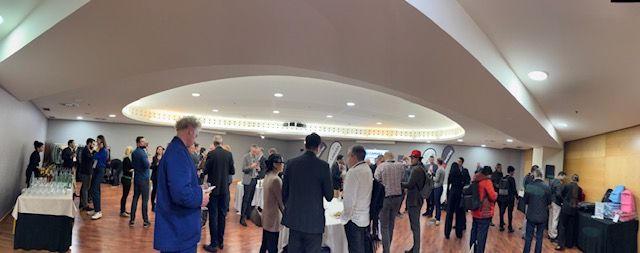
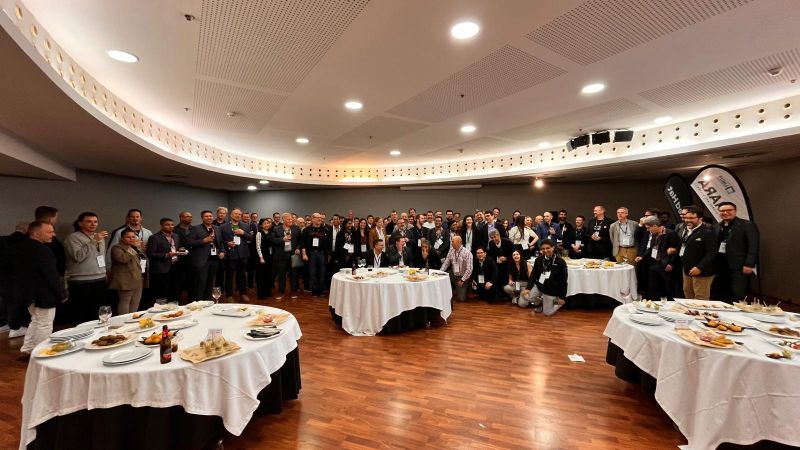
- The year kicked off at MWC, Barcelona (3–6 March), with a community reception, presentations at OpenGateway Developer Summit, in-booth demos, and more.
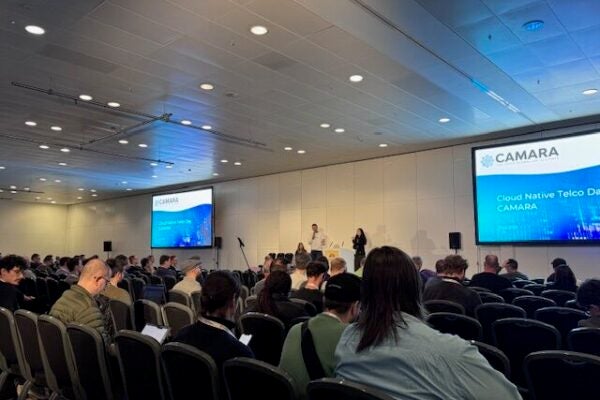
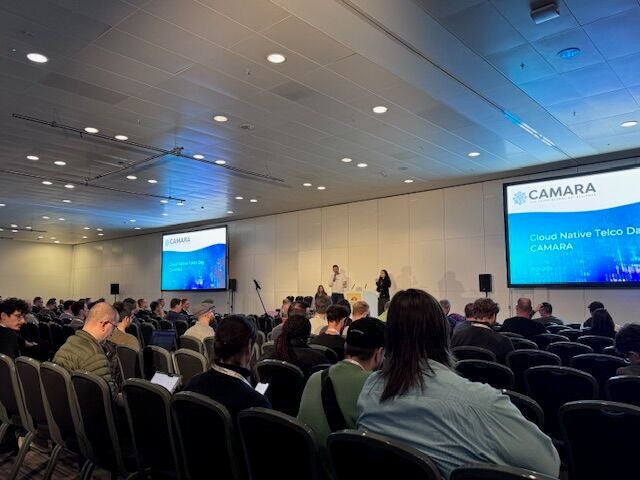
- In spring, we hit up London for Open Networking & Edge Summit and Cloud Native Telco Day, both collocated with KubeCon + CloudNativeCon Europe where we had a booth in the exhibit hall (31 March–4 April).
- Future Net World in London (8–9 May),
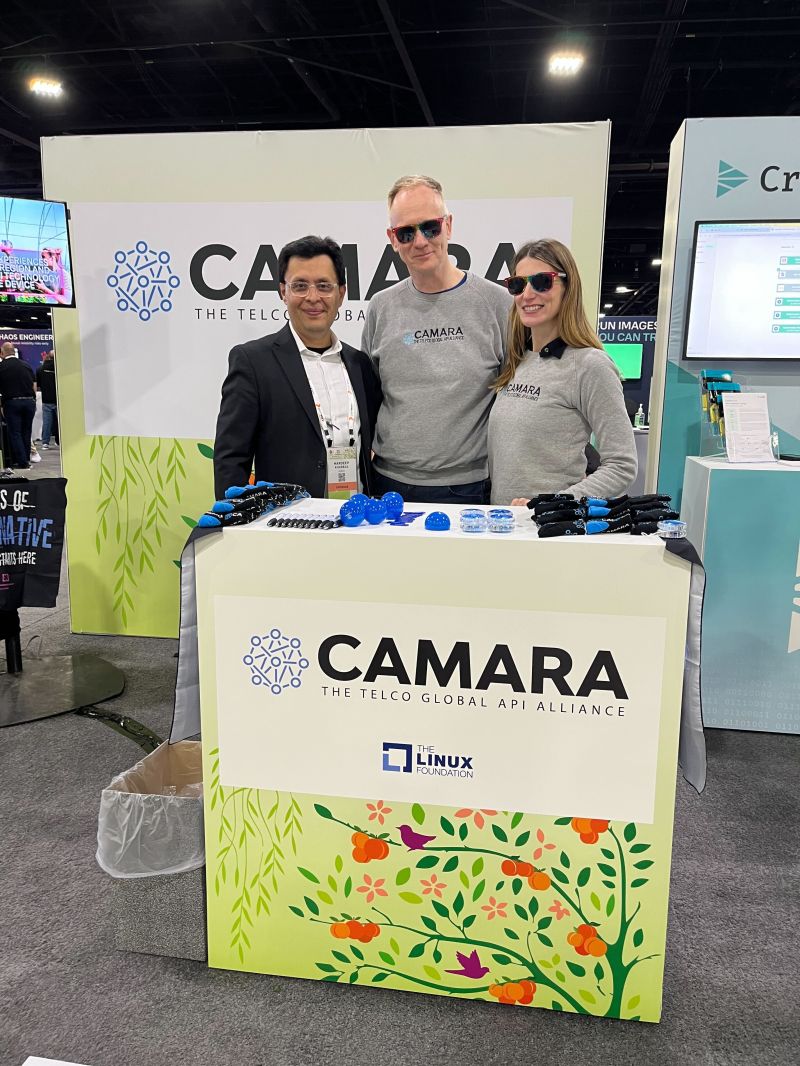
- DTW Ignite in Copenhagen (17–19 June), where the team even sported CAMARA socks, showcased panels and networking.
- Later in June, MWC Shanghai (18–20 June) hosted CAMARA PoD sessions and technical workshops
- Open Source Summit North America, Denver (23–26 June) with a presentation session and booth to engage developers.
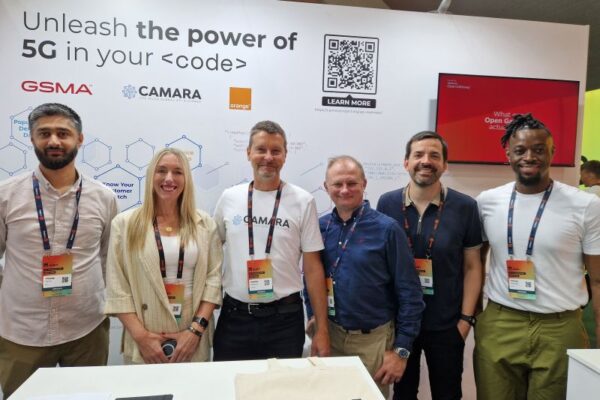
- Summer continued with a strong, collaborative showing in Berlin at the WeAreDevelopers World Congress, (9–11 July) where we partnered with Deutsche Telekom, GSMA, Orange and Telefonica on an interactive open API space.
- Open Source Summit Europe, Amsterdam (25–27 August)
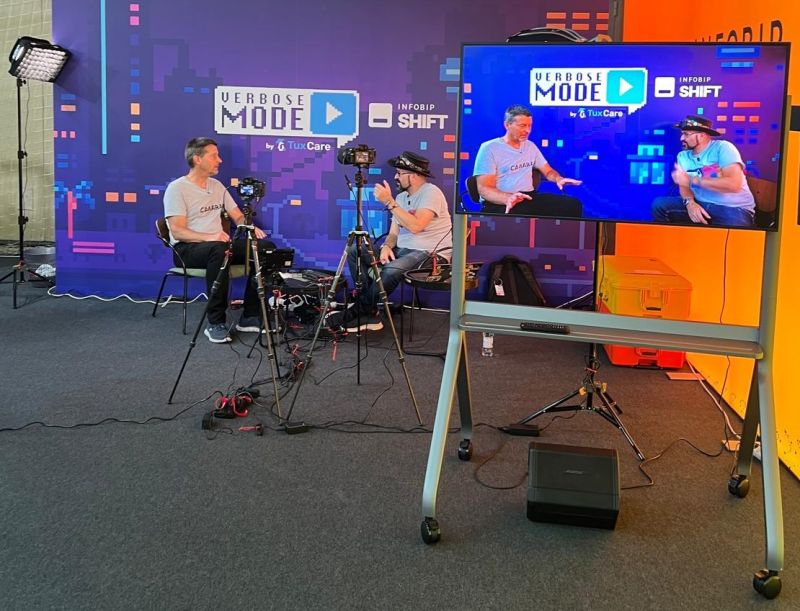
- Infobip SHIFT Zadar (14–16 Sept)
- CASA25 back in Amsterdam (22–24 Sept)
- API Days London (22–24 Sept)
- Network X Paris (14–16 Oct).
- APIdays Amsterdam (6 Nov)
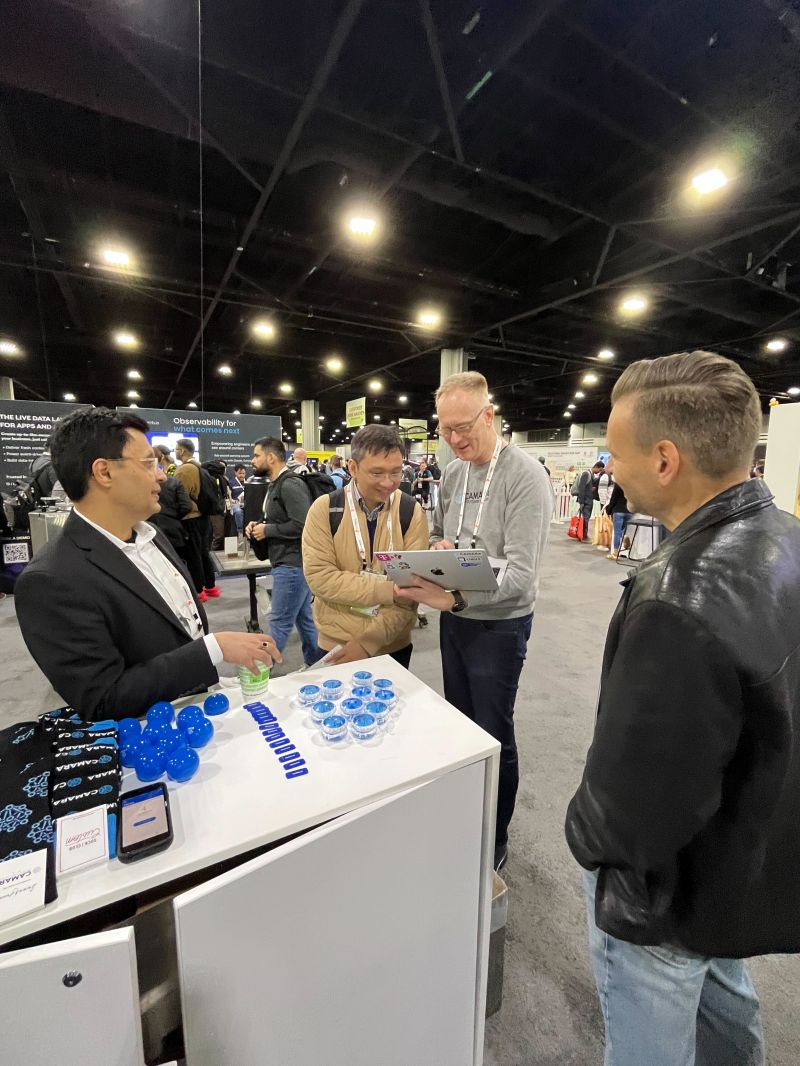
- KubeCon + CloudNativeCon North America in Atlanta in November
2025 highlighted CAMARA’s global reach, vibrant community, and dedication to making telco APIs accessible to developers worldwide.


Special thanks to our members
We’re incredibly grateful to every organization and contributor in our global community — from our Premier Members to associate and to the many participating organizations helping shape the future of open, standardized telco APIs. Your collaboration and innovation power this open source ecosystem.

What’s ahead?
Building on a landmark 2025, CAMARA will continue to evolve its APIs to support scalable, production-grade products, with a particular focus on strengthening capabilities such as Consent Info and expanding overall API coverage. As the ecosystem matures, the project is broadening its focus beyond traditional developers to also support AI-driven use cases, including agentic APIs. This evolution includes adapting CAMARA’s design and governance guidelines to better serve AI-based consumption models. In parallel, CAMARA is exploring the introduction of MCP server functionality to enable faster innovation while maintaining alignment with stable API versioning.
Upcoming Events
Mobile World Congress | March 02-05, 2026 | Barcelona
Join us once again in Barcelona, March 1-5, for Mobile World Congress! In addition to demos at various member booths, CAMARA will host a community reception on Tuesday, March 3 from 18:30 – 20:30 at Grupo Abrassame in Barcelona. Please see here for more details.
CloudNative Telco Day | March 23, 2026 | Amsterdam
Join CAMARA Project at CloudNative Telco Day 2026, co-located with KubeCon + CloudNative Con EU. CAMARA will present a panel presentation on commercial adoption of CAMARA APIs. Stay tuned for more details on our session and how to join us at the event!
Join our CAMARA Community
To learn more and explore ways to get involved in the community, we invite you to:
- Visit the CAMARA library of APIs, a comprehensive resource that details each of the CAMARA APIs (both mature APIs + those in early development), with information on use cases and links to supporting documentation.
- If you would like to contribute to API development, please consider joining a CAMARA working group here, where community members help prioritize and shape upcoming, new APIs.
To stay connected, visit our Contact & Join page, join Community Meetings and contribute here in GitHub, whether through addressing issues, providing code reviews, submitting pull requests, or participating in discussions with your questions and ideas. Please also follow us on LinkedIn for real-time updates.