

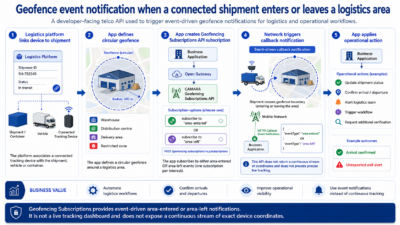
- Logistics and Fleet Operations: Logistics platforms can associate a connected tracking device with a shipment, vehicle or container and define geofences around relevant locations such as warehouses, distribution centres or delivery areas. When the device enters or leaves the subscribed area, the application can update the shipment status, confirm arrival or departure, trigger an operational workflow or alert the relevant team.
- Industrial and smart-facility Monitoring: Industrial applications can subscribe to entry or exit events for connected equipment, vehicles or IoT devices operating within predefined zones. This can help detect unexpected movements, automate internal workflows or trigger additional checks when a device leaves an authorised operational area.
- Safety-Zone Alerts for connected Devices: Applications can subscribe to geofence events for a connected device and trigger an alert when it enters a restricted or hazardous area, or when it leaves an expected zone. This can support safety workflows where the appropriate legal basis, user authorisation and local requirements are met.
- Drone Fleet Coordination and first-response Operations: Applications can use geofence events as part of a broader operational solution for connected drones or other network-connected devices. Entering or leaving a predefined area can trigger workflow updates, coordination actions or safety checks.
- Location-triggered Customer Experiences: Where permitted and appropriately authorised, retail, hospitality, mobility or event applications can react when a user device enters a predefined area. This can support contextual information, service activation or relevant offers without continuously polling for the device location.
See also at GSMA:
- First Responders: First Responders
- Asset Tracking and Protection: Asset Tracking and Protection