

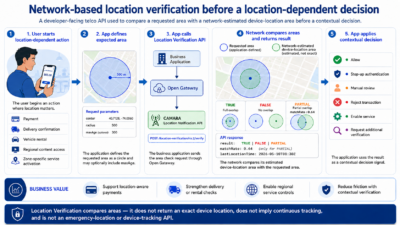
- Fraud Prevention in location-dependent Transactions: Banks, fintechs and other digital service providers can verify whether a user’s device is within an expected area before approving sensitive actions such as card payments, cash withdrawals, account changes or high-risk transactions. A location mismatch can trigger step-up authentication, manual review or rejection of the transaction.
- Validation of app-reported GPS Information: Applications can compare a claimed or device-reported GPS location with an independent network-based verification signal. This can help identify inconsistent location information before enabling location-dependent features or services.
- Connected and validated Delivery Services: Delivery platforms can verify whether a courier or recipient device is within an expected delivery area before confirming a handover, activating a service or completing a location-sensitive workflow.
- Smart Mobility and zone-based Operations: Mobility providers can verify whether a user or connected asset is within an expected operational area before activating rental, access or automated workflow functions. This can support use cases such as shared vehicles, bikes, airport operations or controlled service zones.
- Location-based digital Content and Services: Media, entertainment, gaming, hospitality and event applications can verify whether a user is within an authorised zone before enabling regional content, premium experiences or location-specific features.
See also at GSMA:
- Location Support for GPS: Location Support for GPS
- Connected and validated Delivery Serivces: Connected and validated Delivery Services
- Autonomous Airport Operations: Autonomous Airport Operations
- Remote Vehicle Operation: Remote Vehicle Operation
- Immersive large Events: Immersive large Events
- Fully immersive Gaming Experience: Fully immersive Gaming Experience